Surface finishing has evolved into an engineering procedure. The quality of the coating has a direct influence on the durability, resistance to corrosion and how the product is perceived in today’s manufacturing environment. As global standards get more strict and consumers demand flawless coatings, a lot of facilities are turning to paint robotics for greater control and consistency.
Modern paint robots provide organized motion and programmable precision to tasks that previously depended on operator skills. Automating the paths and angles of spray as well as speed, eliminates many imperfections that cause uneven film build-ups or over use. The result is a predictable coating process that supports better First Time Quality and reduced work-over time.
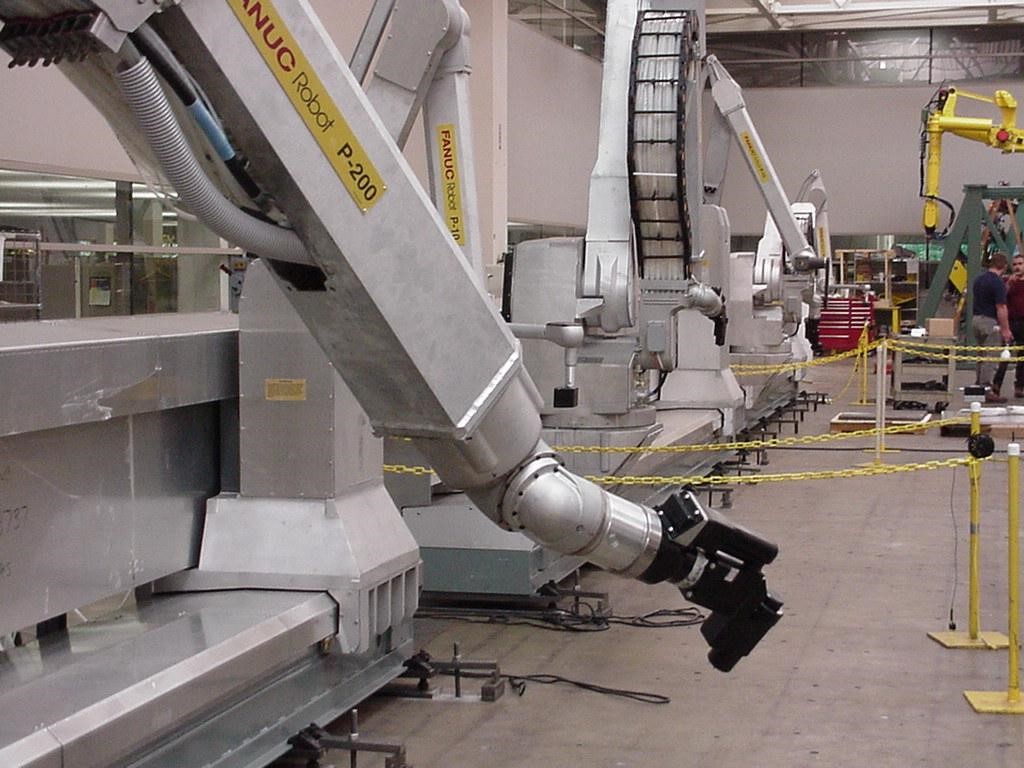
Image credit: automatedsolutions.com.au
Consistency with the same principles, efficiency, and quantifiable Gains
Human factors or even small differences in techniques can result in variations in the thickness and coverage of the manual paint. Paint robots eliminate that variation through repeating the same motion patterns through every cycle of production. This level of repeatability allows for a uniform finish on all parts and optimized distribution of the materials.
The transfer efficiency of advanced robotic paint systems is enhanced. The amount of paint that is sprayed over the surface is decreased when the distance and orientation between the applicator’s and component are maintained precisely. The reduction of material waste leads to cost savings. A decrease in CO2 emissions from volatile organic compounds help to ensure environmental compliance.
Integrated fluid handling within paint robotics ensures accurate mixing ratios for multi-component coatings. It eliminates inconsistencies, which could compromise the integrity and quality of the finished product. Stable flow control combined with adjustable parameter settings allows manufacturers to adjust atomisation and spray patterns without affecting production.
Productivity and safe work environments
The adoption of a robot painter can bring substantial benefits in terms of increased uptime. The paint cells of a robot work in a continuous manner and are not interrupted as opposed to manual processes. Once they have been programmed, they produce a consistent output without needing breaks or constant surveillance.
It is crucial to think about safety when working in a facility that uses solvent-based or bi-component coatings. Paint atomized can create hazardous conditions, particularly when working with substances that can be flammable or reactant. Modern paint robots are engineered for safe operation in demanding environments, which helps reduce exposure to hazardous substances and increasing safety standards in the workplace.
Conveyor tracking technology further strengthens productivity by allowing robotic paint application even when components are in motion. This technology expands the working environment and keeps production lines running smoothly.
Australian Automation Expertise Supporting Industry
For manufacturers seeking to modernise their finishing operations, access to experienced automation partners is essential. In Australia, Automated Solutions has established a solid reputation for offering advanced robotic integration solutions. With vast experience in automation engineering, the group works as certified FANUC robot integrators and assists businesses in implementing custom robot paint solutions that are aligned with their business goals.
Automated Solutions helps manufacturers evaluate their processes, as well as design robotized paint cells by combining experience from industry with technical expertise. Through collaboration in design, simulation, and integration of systems, companies gain an understanding of anticipated performance improvements before installation begins.
Paint robotics is more than only automation. It’s about improving quality, safety and effectiveness. Paint robots that are well-designed can transform finishing on surfaces into a reliable, efficient and controlled operation. Manufacturers can improve their performance by collaborating with automation experts who have the knowledge to assist them achieve long-term success on an industry that is becoming more demanding.